
The short answer
Greek sweet-wine tradition is one of the oldest continuously practised in Europe — older than Sauternes, older than Port, older even than Tokaji. Today it is best represented by four legally protected appellations, each based on a different grape and a different method:
- PDO Vinsanto (Santorini) — sun-dried Assyrtiko, oak-aged, oxidative
- PDO Samos — Muscat Blanc à Petits Grains, multiple styles from fresh to ultra-concentrated
- PDO Mavrodaphne of Patras — fortified red, oak-aged, Port-style
- PDO Daphnes (Crete) — sun-dried Liatiko, lighter and aromatic
Together they cover almost every classical dessert-wine style — and pair beautifully with food, not just with dessert.
Vinsanto: Santorini’s volcanic sweet wine
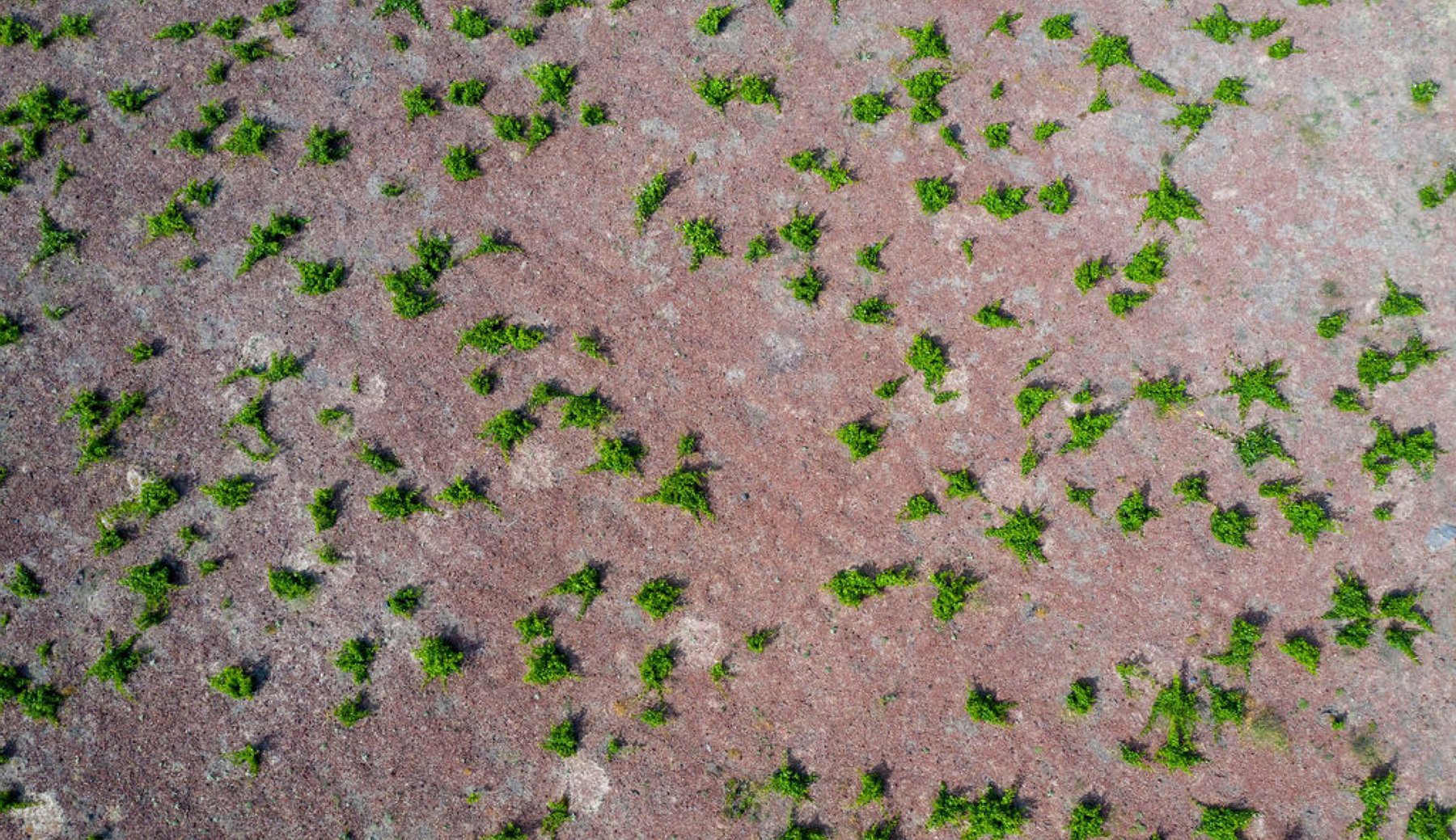
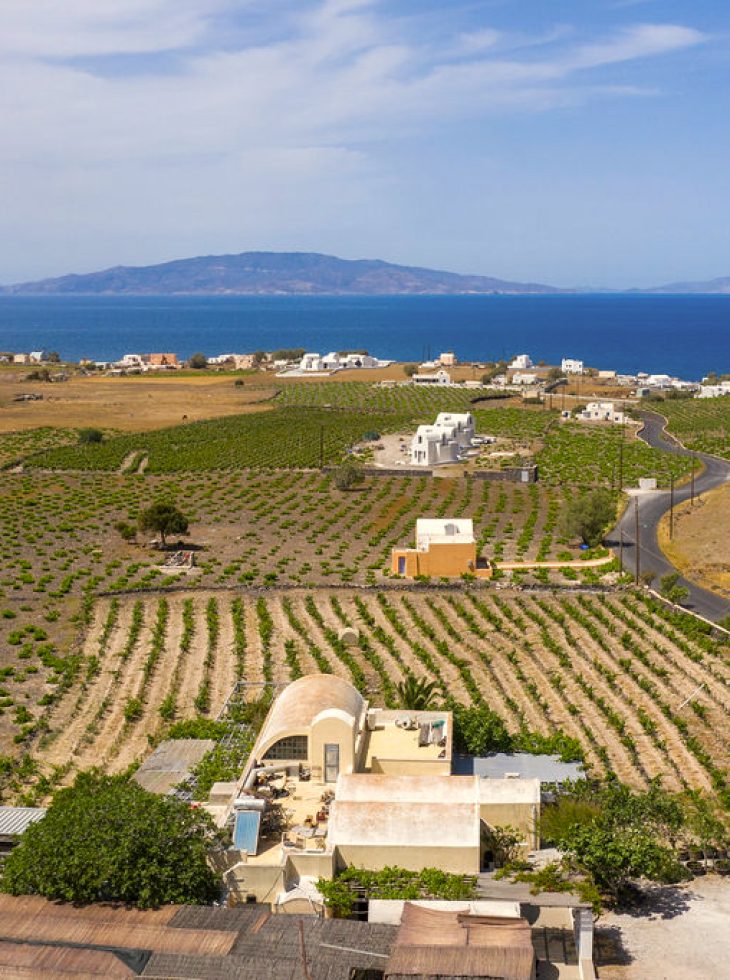
PDO Vinsanto is Santorini’s historic sweet wine and arguably Greece’s most celebrated dessert designation. It is made by the passito method: harvested grapes are laid out on mats under the Cycladic sun for 10 to 14 days, concentrating sugars and acids through evaporation. The resulting must is fermented slowly to a sweet finish and then aged in oak for a minimum of 24 months — though most fine examples are aged for many years longer, and the very best can rest in barrel for 20, 30 or even 50 years before bottling.
Vinsanto specifications
- Grapes: minimum 51% Assyrtiko, plus Aidani and/or Athiri.
- Sun-drying: 10 to 14 days under direct sun (the local term is liastos).
- Minimum oak ageing: 24 months for PDO designation; “Aged” or “Vintage” Vinsanto can mean decades.
- Style: sweet, oxidative, intensely concentrated.
- Alcohol: generally 9–13% abv; sugars 100–250 g/L.
Tasting profile
Expect dried fig, walnut, caramel, marmalade, dried citrus peel, sweet spice and the distinctive saline mineral edge that volcanic Santorini imprints on its wines. The acidity remains remarkably high — a characteristic of Assyrtiko that gives Vinsanto its balance even at the highest sugar concentrations.
Leading Vinsanto producers
- Estate Argyros — fourth-generation producer, the most consistent at the very top tier.
- Domaine Sigalas — modern, precise style; the 4 Years Vinsanto is widely loved.
- Gaia Wines — the Strata range emphasises terroir-driven Vinsanto.
- Hatzidakis — small-production, organically farmed since 1997, cult-status.
- Santo Wines (cooperative) — well-priced quality, broad availability.
Samos: Muscat from terraced mountains
PDO Samos is the dessert wine of the Aegean island of Samos, made exclusively from Muscat Blanc à Petits Grains (the same noble variety used in Vin de Constance and the great Muscats of Beaumes-de-Venise and Lunel). The island’s vineyards — planted on terraced mountainsides rising to over 800 metres — are themselves a UNESCO-recognised cultural landscape.
Samos comes in several styles, the most important of which are:
- Samos Doux / Vin Doux Naturel: the everyday fortified sweet style, lightly fortified to 15% abv. Fresh, grapy, immediately appealing.
- Samena Gold: a lighter, lower-alcohol, less-fortified table sweet style.
- Anthemis: oak-aged Doux, with 5+ years in cask. Richer, deeper, with toasted-almond and dried-fruit notes.
- Nectar: sun-dried Muscat, long-aged, the island’s most concentrated and age-worthy style. Comparable in ambition to a great Vinsanto, though stylistically opposite.
Tasting profile
Light Samos shows fresh grape, apricot, orange blossom and honey. Aged Samos (Anthemis, Nectar) develops fig, date, dried apricot, toasted nut, caramel, and a slight bitter-orange edge. The acidity is gentler than in Vinsanto.
Leading producer
The island’s production is largely cooperative through the Union of Vinicultural Cooperatives of Samos (UWC Samos) — one of the oldest wine cooperatives in Europe, established in 1934. Its wines are widely available internationally and offer arguably the best value in the European dessert-wine category at every tier.
Mavrodaphne of Patras: Greek “Port”
PDO Mavrodaphne of Patras is a fortified sweet red wine produced in the area around the city of Patras, in the northern Peloponnese. It is the closest stylistic equivalent to Tawny Port that Greece offers — and an excellent and far cheaper alternative on a restaurant list.
Specifications
- Grapes: the indigenous Mavrodaphne variety, optionally blended with up to 49% Korinthiaki (Black Corinth).
- Method: alcoholic fermentation is arrested by the addition of grape spirit, leaving residual sweetness.
- Ageing: oak ageing, often in old barrels in solera-like systems, sometimes for decades.
- Alcohol: typically 15-18% abv.
Tasting profile
Dried fig, prune, raisin, dark chocolate, walnut, sweet spice, leather, espresso. The texture is rich, syrupy in older examples, with a long, warm finish.
Leading producers
- Achaia Clauss — the historic estate (founded 1861) most associated with Mavrodaphne internationally.
- Antonopoulos Vineyards — the Adoli Ghis and small-batch Mavrodaphne releases are excellent.
- Cavino — the Domaine Mega Spileo Mavrodaphne offers excellent value.
A separate PDO Mavrodaphne of Cephalonia exists for production on the Ionian island.
Daphnes (Crete): the elegant outlier
PDO Daphnes, on Crete, is made from sun-dried Liatiko grapes. It is less famous internationally than the other three but offers a distinctive, lighter, more aromatic sweet red profile — with notes of dried cherry, rose petal, spice and orange peel, and gentler alcohol. Few producers continue the tradition, but those who do — including Domaine Lyrarakis — are quietly excellent.
Other Greek sweet wines worth knowing
- PDO Muscat of Limnos — Muscat of Alexandria (a different Muscat from the Samos variety), giving fuller, raisinier wines.
- PDO Muscat of Patras — the white companion to Mavrodaphne, fortified Muscat from the same region.
- PDO Muscat of Rhodes — small production, similar style to Limnos.
- PDO Monemvasia-Malvasia — a recent designation reviving the historic “Malmsey” wines of Monemvasia in the southern Peloponnese.
How to taste, serve and pair
Serving temperature
- Vinsanto: 12–14°C, in a smaller white-wine glass to focus aromatics.
- Samos: 8–12°C depending on style; younger fortified styles colder.
- Mavrodaphne: 14–16°C, in a Port glass.
Food pairing
- Vinsanto loves walnut-based desserts (karydopita), aged hard cheeses (graviera, aged kefalotyri, parmesan), and salty blue cheeses (Roquefort, Gorgonzola). It also handles foie gras as well as a Sauternes does.
- Samos is the most versatile across desserts: fruit tarts, apple strudel, light custards, sponge cakes, citrus pastries, and most fresh fruits.
- Mavrodaphne is the natural match for dark chocolate, espresso, walnut and dried-fig desserts, and rich coffee-based pastries.
- Daphnes pairs beautifully with lighter berry desserts and fresh cheeses.
A strong general rule: the older the dessert wine, the simpler the pairing should be. A great aged Vinsanto needs nothing more than a piece of dark chocolate and a few salted walnuts to show its full range.
Why this matters
Greek dessert wines are structurally undervalued in international markets. A top-tier Vinsanto from a celebrated producer retails internationally for less than half the price of a comparable Sauternes; a great Samos Nectar sells for a quarter of a great Vin Santo from Tuscany. For sommeliers, importers and curious drinkers, the entire category offers outstanding quality-to-price ratio — and a way into one of the most ancient living traditions in European winemaking.
Find the perfect Greek wine for what you’re eating
Use e-SOM, our digital sommelier, to pair Greek wine with your food — or even with your mood. Free, fast, available in English and Greek.
See also: Santorini Wine: A Complete Guide · What Is Assyrtiko? · Mediterranean Cuisine Pairing